When Did New Year’s Day Become a Holiday in England?
TL;DR
New Year’s Day became an official public (bank) holiday in England on 1 January 1974.
Before that, it was widely celebrated but remained a normal working day for most people.
New Year’s Day became a holiday in England on 1 January 1974, when it was added as a statutory bank holiday under modern public-holiday legislation.
Why did it take so long for New Year’s Day to become a holiday in England? Looking at the social and legislative intent behind public holidays, we see that it was only officially recognised on 1 January 1974, reflecting a balance between tradition, work, and modern national celebration.
When Did New Year’s Day Become a Holiday in England?
The answer is clear and well documented:
➡️ England officially recognised New Year’s Day as a public holiday from 1 January 1974.
This change took effect under the Banking and Financial Dealings Act 1971, which reorganised public holidays in England and Wales. While the Act was passed in 1971, its provisions came fully into force in 1974, making New Year’s Day a statutory bank holiday for the first time.
Was New Year’s Day Celebrated Before 1974?
Yes. Long before it became a legal holiday, New Year’s Day was widely celebrated in England with:
- Church services
- Family gatherings
- Social and cultural traditions
However, celebration did not mean official time off. For much of England’s history:
- Shops, offices, and factories often remained open
- Time off work was informal or unpaid
- New Year’s Day had no statutory protection
Why Was New Year’s Day Not a Holiday Earlier?
Historically, English public holidays were tied mainly to:
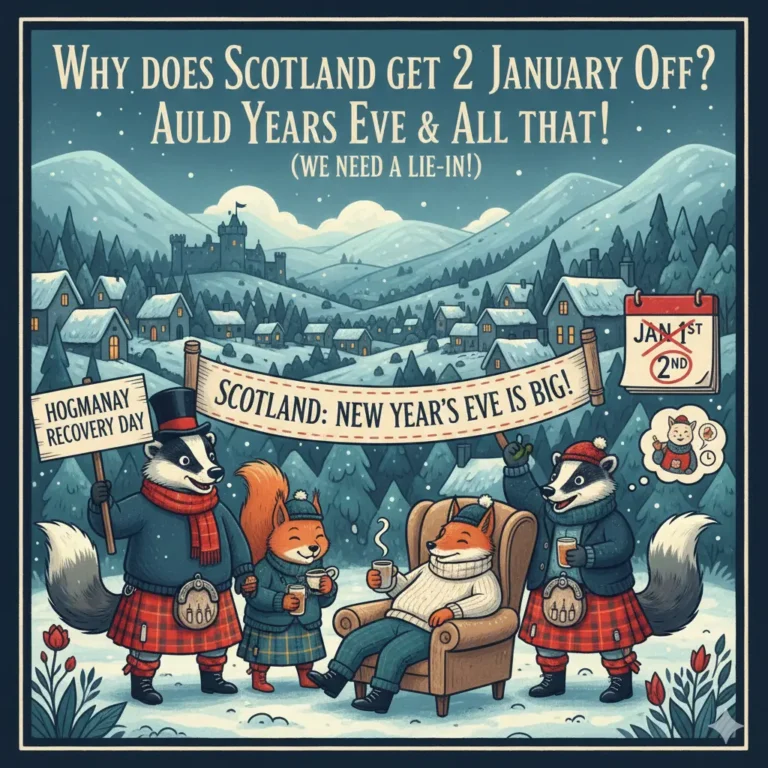
Unlike Scotland—where New Year (Hogmanay) was the main winter festival—England placed greater emphasis on Christmas, which already held public-holiday status. As a result, New Year’s Day remained culturally important but legally ordinary.
How Did England Compare With the Rest of the UK?
- Scotland recognised New Year’s Day as a public holiday much earlier due to strong Hogmanay traditions
- Scotland also has 2 January as an additional bank holiday
- England and Wales only added New Year’s Day as a statutory holiday in 1974
- Northern Ireland followed the same timetable as England and Wales
From 1 January 1974 onward, New Year’s Day became a public holiday across the entire UK.
Did Calendar Changes Affect New Year in England?
Yes. England did not always treat 1 January as the start of the year.
- Until 1752, England officially marked the New Year on 25 March (Lady Day)
- Scotland changed to 1 January much earlier, in 1600
- The adoption of the Gregorian calendar in 1752 finally aligned England with modern European practice
However, even after 1752, New Year’s Day still took more than two centuries to gain public-holiday status in England.
Summary: When Did New Year’s Day Become a Holiday in England?
Celebrated for centuries: Yes
Legal start of the year (England): 1752
Official public holiday: 1 January 1974
Conclusion
So, when did New Year’s Day become a holiday in England?
Despite its long cultural history, the answer is relatively recent: New Year’s Day only became a statutory public holiday in England in 1974. This change reflected modern attitudes toward work, leisure, and alignment with the rest of the UK—bringing official recognition to a day that had already been celebrated for generations.
FAQs
When did New Year’s Day become a holiday in England?
New Year’s Day became an official public (bank) holiday in England on 1 January 1974. Before this date, it was widely celebrated but remained a normal working day for most people.
When did England make New Year’s Day a public holiday?
England made New Year’s Day a public bank holiday starting on 1 January 1974.
Was New Year’s Day a holiday in England before 1974?
No. Before 1974, New Year’s Day was celebrated socially but was not a statutory public holiday in England.
Why did England adopt New Year’s Day as a holiday so late?
England traditionally prioritised religious holidays like Christmas and Easter. New Year’s Day was seen as a calendar event rather than a public holiday until modern reforms.
Did Scotland recognise New Year’s Day earlier than England?
Yes. Scotland recognised New Year’s Day as a public holiday much earlier due to its strong Hogmanay traditions.
Is New Year’s Day a holiday across the whole UK today?
Yes. Since 1974, New Year’s Day has been a public holiday across the entire UK.